
Travel Money Without the Hidden Costs
Using cards and cash abroad can be straightforward, but the cheapest option often depends on where the exchange rate is applied and which fees are added. This guide explains how debit cards, credit cards, prepaid travel cards and cash work overseas, why paying in local currency often matters, where ATM costs can stack up, and what protection records are worth keeping.
Overview
Paying abroad is usually simplest and often cheapest when the transaction stays in the local currency and the card issuer later converts it using the card scheme rate, with only any clearly disclosed issuer fees added on top. The main avoidable extra cost is dynamic currency conversion, where a merchant or ATM converts the amount into pounds before the transaction reaches the card issuer, often using a worse rate or an added mark-up.
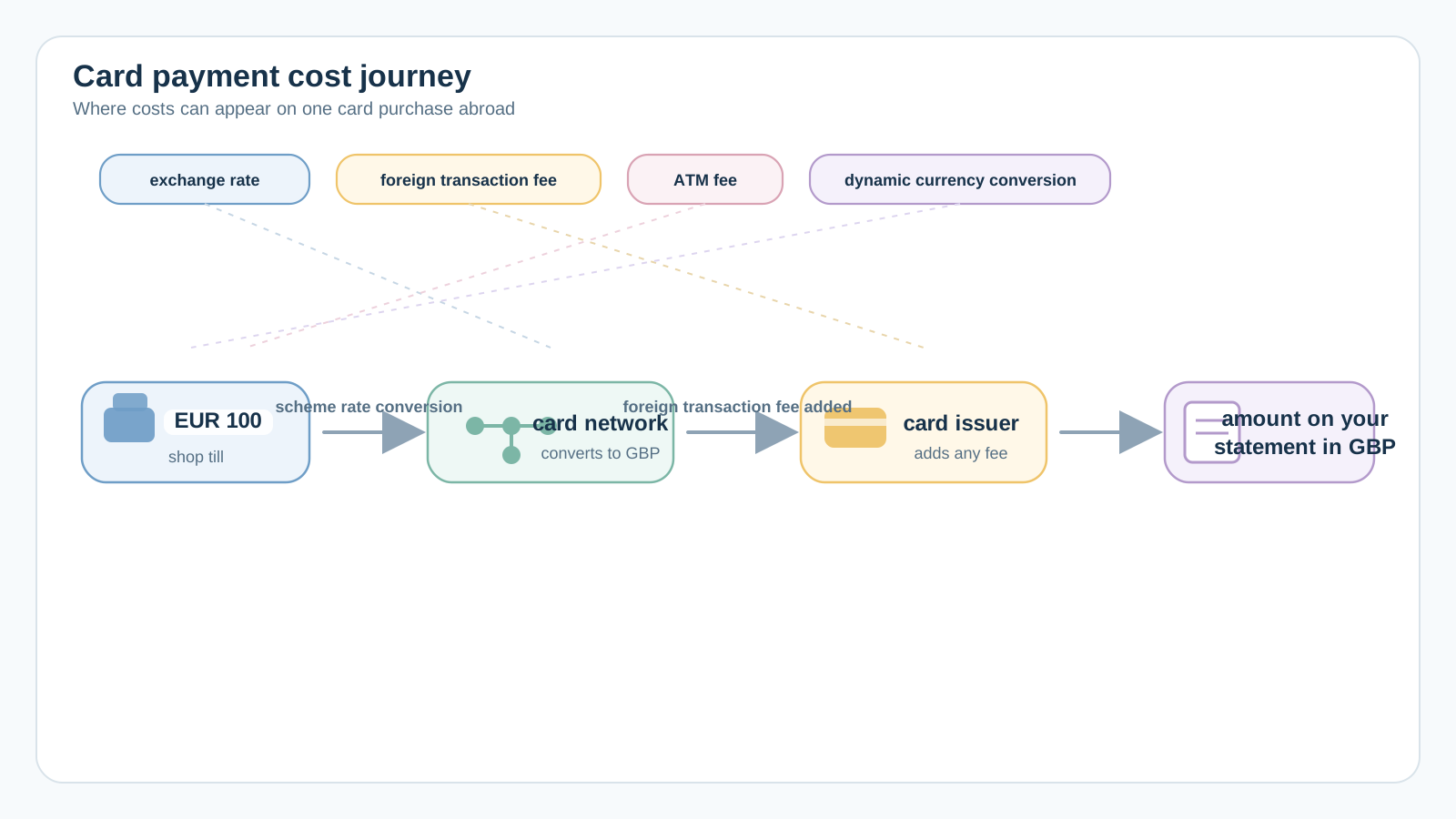
Costs can appear in four places across the payment journey: the exchange rate itself, an issuer foreign transaction fee, an issuer cash withdrawal or cash advance fee, and a local ATM operator fee. Debit card purchases abroad will usually use the Visa or Mastercard exchange rate, but the bank may add a currency exchange fee and sometimes a separate spending or cash fee. Prepaid cards can also carry exchange rate mark-ups, foreign transaction fees and foreign ATM withdrawal fees, depending on provider terms.
Credit, debit, prepaid travel cards and cash do not work in the same way. Debit cards usually take money directly from a current account. Credit cards create borrowing, so cash withdrawals can be treated as cash advances with a fee and immediate interest, which is different from a purchase. Prepaid travel cards use money loaded in advance and may either spend from a matching currency wallet or convert at the provider’s rate if the transaction currency is not already loaded. Cash has no card fee at the point of payment, but its real cost depends on the rate and fees used when buying or withdrawing it.
Protection also differs by payment method. Section 75 is the strongest named legal protection in this area, but it is limited to qualifying credit arrangements. It can apply where some or all of the purchase was made by credit and the cash price is more than £100 and not more than £30,000. Debit cards and prepaid cards do not get Section 75, although chargeback processes may still exist.
Key definitions
Step by step walkthrough
At a card terminal or ATM abroad, the amount starts in the local currency. If there is no dynamic currency conversion, the local-currency amount is sent through the card network. Visa and Mastercard both publish currency conversion tools showing that their networks calculate rates for cross-border purchases and ATM transactions.
The decision loop
A good travel money decision usually comes down to a repeatable set of checks: how the payment method works, who sets the exchange rate, which fees can apply, whether a withdrawal is being treated as cash, which currency is being selected at the point of payment, and what protection or records may matter later.
Worked examples
These examples show how costs can build up in different ways. They illustrate the sequence described above and use the figures provided in the research report only.
This example compares paying in local currency with accepting dynamic currency conversion on the same purchase. It illustrates a common operational pattern where the issuer does not add a foreign transaction fee when the transaction reaches it in pounds, but issuer terms can differ, so the exact fee outcome must always be checked.
| Step | Detail | Value |
|---|---|---|
| Purchase amount | Purchase in Spain | €100.00 |
| Scheme conversion rate | Settlement date rate | £0.85 per €1 |
| Converted amount | €100 × £0.8500 | £85.00 |
| Issuer foreign transaction fee | £85.00 × 2.99% | £2.54 |
| Final posted cost if local currency is chosen | Total after issuer fee | £87.54 |
| DCC rate offered by merchant | Merchant conversion rate | £0.90 per €1 |
| Immediate sterling amount if DCC is chosen | €100 converted at £0.9000 | £90.00 |
| Extra cost of DCC in this example | £90.00 minus £87.54 | £2.46 |
| Cheaper option in this example | £87.54 | |
This example shows how the exchange rate, the local ATM operator fee and the issuer’s foreign cash fee can all affect the final cost of a debit card withdrawal.
| Step | Detail | Value |
|---|---|---|
| Cash amount | Withdrawal in Italy | €200.00 |
| ATM operator fee | Local ATM fee added to withdrawal | €3.00 |
| Total foreign-currency transaction | €200 plus €3 | €203.00 |
| Scheme conversion rate | Conversion rate used | £0.85 per €1 |
| Converted amount | €203 × £0.8500 | £172.55 |
| Issuer foreign cash fee | £172.55 × 2.99% | £5.16 |
| Final total cost | Converted amount plus issuer fee | £177.71 |
| Final total cost | £177.71 | |
Checklists
A few checks before you travel and at the point of payment can make the difference between a straightforward transaction and an unnecessarily expensive one.
Before travel money setup checklist
At payment and cash withdrawal checklist
Glossary
- Exchange rate
The price of one currency in another currency. Example: €1 = £0.85.
- Card scheme rate
The rate used by the card network, such as Visa or Mastercard, to convert a foreign-currency card transaction into the card’s billing currency.
- Mark-up
An extra percentage added on top of a reference or scheme exchange rate by an issuer, merchant, ATM operator or prepaid provider.
- Foreign transaction fee
An issuer fee, often percentage-based, added to purchases or withdrawals made in a foreign currency.
- ATM fee
A fee related to a cash machine withdrawal. It may be charged by the ATM operator, the card issuer, or both.
- Dynamic currency conversion
A service where a merchant or ATM converts a foreign-currency transaction into the cardholder’s home currency at the point of payment or withdrawal, often using its own rate and mark-up.
- Cash advance
A credit card cash withdrawal or similar cash-equivalent transaction that is treated as borrowing cash rather than making a purchase, often triggering a fee and interest from the transaction date.
- Section 75
A statutory UK consumer credit protection under Section 75 of the Consumer Credit Act 1974, making the creditor jointly and severally liable with the supplier for breach of contract or misrepresentation in qualifying transactions.
Verified callouts
Why local currency often costs less
If a card payment stays in the local currency, the conversion usually happens through the card network and then the issuer adds any disclosed fee. If pounds are selected abroad, the merchant or ATM may apply dynamic currency conversion, using its own rate and mark-up instead. That is why paying in local currency often avoids extra conversion cost, though issuer foreign transaction fees can still apply.
Foreign ATM fees can come from more than one party
A foreign ATM withdrawal can include a local ATM operator fee and a separate issuer fee. If the card is a credit card, the issuer may also treat the withdrawal as a cash advance and charge interest from the day of withdrawal. The exchange rate can also change the final cost, especially if the ATM offers dynamic currency conversion.
Section 75 is strong, but narrow
Section 75 may apply where a qualifying purchase is made using credit and the cash price of the goods or services is more than £100 and not more than £30,000. It can still apply where only part of the price was paid on the credit card, but it does not apply to purchases paid wholly by debit card or bank transfer. Whether it applies also depends on the debtor-creditor-supplier link.
Internal links
Definitions
- Exchange rate
- Card scheme rate
- Foreign transaction fee
- Non-sterling transaction fee
- Exchange rate mark-up
- Dynamic currency conversion
- Cash advance
- ATM operator fee
- Prepaid travel card
- Debit card abroad
- Credit card abroad
- Chargeback
- Section 75
- Debtor-creditor-supplier agreement
- Local currency vs home currency
- Foreign cash withdrawal fees
Sources
- Exchange Rate Calculator - Currency Converter
- Currency Converter Calculator
- Decoding Dynamic Currency Conversion
- Rules and policies
- Consumer Duty: International payment pricing transparency - good and poor practice
- Approach to Payment Services and Electronic Money 2017, November 2024 update
- Occasional Paper 56: Fair exchange
- Using and paying with debit cards
- Prepaid cards explained
- Problems with goods and services: section 75 and chargeback
- Disputed transactions
- Misunderstanding credit protection could cost consumers thousands
- Consumer Credit Act 1974, section 75
- Dynamic Currency Conversion Performance Guide
- ATM locator help page
- Visa Core Rules and Visa Product and Service Rules
- Credit card fees, rates and charges
- Credit card interest rates
- Using your credit card abroad
- Charges and Fees: Credit Cards
- Money Card Terms and Conditions
- Multi-currency Cash Passport help