
Travel Insurance Explained
Travel insurance covers defined losses from specified travel events, but only when the policy wording, limits, exclusions, excesses and claims conditions all line up. This guide explains what travel insurance usually includes, what it often does not include, how disclosure and timing affect cover, where ATOL and Section 75 fit in, and what evidence matters if you need to claim.
Overview
Travel insurance is a contract that pays defined losses arising from specified travel events, subject to the policy wording, limits, exclusions, excesses, declarations and claims conditions. It is not a general promise to fix every holiday problem. In practice, cover often spans three phases: pre-travel cover such as cancellation, on-trip cover such as emergency medical expenses, curtailment, baggage and delay, and liability or legal sections that apply only if the wording is triggered. The exact trigger matters as much as the headline name of the cover.
Across mainstream UK policies, the core sections commonly include emergency medical expenses and repatriation, cancellation, curtailment, baggage or personal possessions, travel delay or missed departure, personal liability and legal expenses. Some risks travellers assume are standard, especially supplier failure or scheduled airline failure, may be optional or absent unless they are expressly included.
Claims depend heavily on disclosure and policy conditions. If an insurer asks clear medical questions, the traveller must take reasonable care not to misrepresent the answer. Some annual policies also require significant changes in health after purchase to be reported if the policy says so. Failing to declare a relevant pre-existing condition, or a later significant change, can lead to an exclusion, extra premium, altered terms or refusal of a related claim.
Travel insurance also sits alongside other protections, but they do different jobs. ATOL protects certain flight-based bookings if the ATOL holder stops trading. Section 75 may help with eligible card purchases involving breach of contract or misrepresentation. Neither is a substitute for emergency medical, repatriation or curtailment cover.
Key definitions
How travel insurance works step by step
At claim stage, the insurer checks the trigger, exclusions, causation, evidence, recoveries from other sources and the calculation.
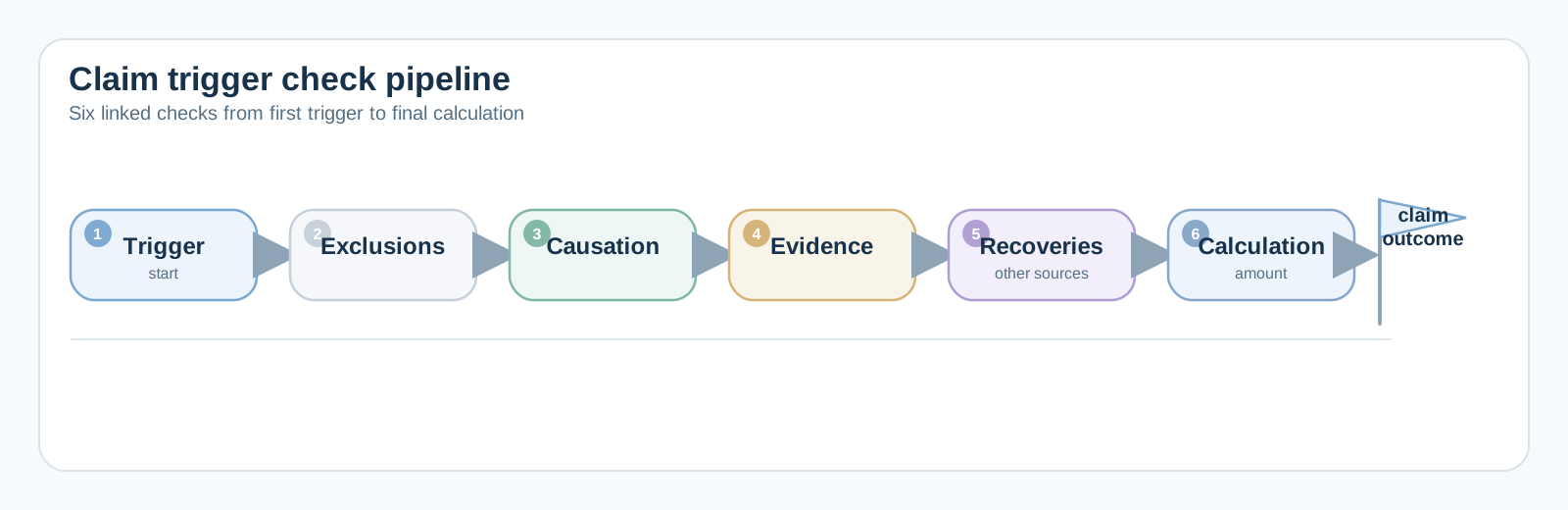
The Financial Ombudsman says it will typically want to know what was booked, how it was paid, when the policy was taken out, whether refunds, chargeback or Section 75 were pursued, and which policy documents applied.
The decision loop
The easiest way to understand travel insurance is to treat it as a series of checks. What is the trip, who is travelling, what cover is actually included, what other protections exist, when does the policy start, and what evidence would support a claim if something goes wrong?
Worked examples
These examples show how the logic of travel insurance works in practice. They illustrate triggers, limits, excesses and the way travel insurance differs from ATOL and Section 75.
This example uses the assumptions set out in the research report, including one assumed excess used only to show the calculation method. The real excess always depends on the policy wording and schedule.
| Item | Detail | Value |
|---|---|---|
| Prepaid trip cost | Total trip cost paid in advance | £1,200.00 |
| Cancellation limit | Policy limit used in the example | £1,000.00 |
| Assumed excess | Used only to illustrate the calculation method (assumption) | £100.00 |
| Refunds from airline and hotel | Amounts recovered elsewhere before the cancellation claim | £300.00 |
| Irrecoverable cancellation loss | Remaining unrecovered trip cost after refunds | £900.00 |
| Accepted cancellation payment | Irrecoverable loss less the assumed excess | £800.00 |
| Emergency medical and repatriation costs | Acute appendicitis abroad with urgent treatment and repatriation | £18,000.00 |
| Accepted emergency medical payment | Covered emergency costs less the assumed excess | £17,900.00 |
| Main point | 2 accepted scenarios illustrated | |
This example shows how different protections can apply to the same booking depending on what has actually gone wrong.
| Item | Detail | Value |
|---|---|---|
| Package price | Flight-plus-hotel package bought in the UK | £2,400.00 |
| Credit card deposit | Paid by credit card | £600.00 |
| Bank transfer balance | Paid by bank transfer | £1,800.00 |
| Scenario A primary route | Tour operator stops trading before departure: ATOL is the primary insolvency protection route | 1 |
| Scenario B primary route | Traveller breaks a leg before departure: cancellation section of travel insurance is the relevant protection | 2 |
| Scenario C primary route | Emergency surgery abroad and assisted flight home: emergency medical and repatriation cover responds | 3 |
| Scenario D primary route | Holiday company cancels the package flight but remains solvent: package rights may be central, with insurance or Section 75 depending on any unrecovered loss and wording | 4 |
| Protections compared | 4 scenarios | |
Checklists
Use these checklists before buying and when preparing for a possible claim.
Pre-purchase travel insurance checklist
Incident and claim readiness checklist
Glossary
- Annual multi-trip policy
A policy covering multiple trips within one policy year, subject to a maximum duration per trip.
- ATOL
A UK insolvency protection scheme for certain flight-based holidays and flights, triggered if the ATOL holder stops trading.
- Baggage or personal possessions
Cover for loss, theft or damage to belongings, usually subject to total and per-item limits and proof conditions.
- Cancellation
Cover for irrecoverable prepaid travel costs if the trip must be cancelled before departure for an insured reason.
- Curtailment
Cover for cutting a trip short because an insured event occurs during travel. Medical necessity often matters.
- Excess
The amount deducted from a claim, often per incident and per insured person depending on the wording.
- IPID
Insurance Product Information Document, a standard summary of key cover and exclusions.
- Legal expenses
Cover for legal costs to pursue a civil claim, often for personal injury suffered during the trip.
- Personal liability
Cover for legal liability to third parties for accidental injury or property damage caused by the insured during the trip.
- Pre-existing medical condition
A medical condition existing before policy purchase or otherwise defined by the insurer’s screening and wording, often excluded unless declared and accepted.
- Repatriation
Arrangements and costs of returning the insured to the UK when medically necessary.
- Section 75
A statutory consumer credit protection route that can make the creditor jointly liable for certain supplier breaches or misrepresentations on eligible purchases. It is separate from insurance.
- Supplier failure, SAFI or end supplier failure
Cover for losses caused by insolvency of an airline, hotel, tour operator or other supplier, if the policy expressly includes it.
Verified callouts
Buy travel insurance as soon as the booking creates a financial risk
Travel insurance is usually most useful when bought shortly after booking, not just before departure, because cancellation cover only works once the policy is in force. The Financial Ombudsman has specifically warned that if an annual policy does not start from the day of purchase, there will be no cancellation cover in place for the period before it starts. Single-trip policies also generally start when payment is accepted, with pre-travel cover then running until departure.
Medical declaration matters because it affects both price and claim validity
If an insurer asks clear medical questions, the insured must take reasonable care not to misrepresent the answers. A declared condition may be accepted, accepted for extra premium, excluded, or cause the insurer to decline cover altogether. An undeclared relevant condition can later lead to a refused claim or retrospective policy changes if the insurer shows it would have acted differently. Significant changes in health after purchase may also need to be reported where the policy requires it.
ATOL and Section 75 protect different losses from those covered by travel insurance
ATOL mainly protects against the insolvency of the ATOL holder and does not cover ordinary medical emergencies or routine cancellation by the traveller. Section 75 is a card-payment remedy for supplier breach or misrepresentation and may help where travel services go wrong, but it is not emergency medical, curtailment or baggage insurance. Travel insurance remains the protection designed for medical costs, repatriation, curtailment and many in-trip losses.
Related definitions pages
Definitions
- What travel insurance is
- Cancellation cover explained
- Curtailment cover explained
- Emergency medical expenses and repatriation explained
- Travel delay, missed departure and abandonment explained
- Baggage and personal possessions cover explained
- Personal liability vs legal expenses
- Excesses, limits and single-item limits
- Pre-existing medical conditions and medical screening
- Hazardous activities and sports cover
- Annual multi-trip vs single-trip travel insurance
- Backpacker and long-stay travel insurance
- Winter sports travel insurance
- Cruise travel insurance
- Business travel insurance
- Supplier failure, end supplier failure and SAFI
- ATOL explained
- Package travel regulations explained
- ABTA explained
- Section 75 and chargeback for travel bookings
- How to make a travel insurance claim
- Common reasons travel insurance claims are refused
Sources
- Medical expenses and repatriation
- Curtailment
- Change in health
- Travel insurance for businesses: what we ask for
- Problems with goods and services: section 75 and chargeback
- Missed departure, delay and abandonment
- Travel insurance complaints at their highest levels since the pandemic
- ICOBS 6A.4 Travel insurance and medical conditions
- ICOBS 6.1 guidance on medical condition exclusions in travel insurance policies
- Cancellations and refunds: helping consumers with rights and routes to refunds
- Foreign travel insurance
- Package holidays: complying with regulations - guidance for businesses
- What is ATOL?
- Failure of scheduled airlines
- Code of Conduct Guidance, July 2024
- Travel Insurance Policy Summary
- Single Trip & Annual Multi-Trip Travel Insurance IPID